SEND Outreach Project
The FamilyKind SEND Outreach Project is a community-based initiative providing early, relational and preventative support to families of children with Special Educational Needs and Disabilities across the Wigan borough.
This is not a clinical service.
It is not a crisis response.
It is early, informed support delivered in human spaces.
We know that navigating SEND systems can feel overwhelming. Thresholds are high. Waiting times are long. Communication is often technical and unclear. Parents are left carrying stress, isolation and burnout while trying to do the best for their child.
The SEND Outreach Project exists to change that.
Project Overview
The FamilyKind SEND Outreach Project is a 12-month, community-based initiative designed to provide early, preventative and relational support to families of children with Special Educational Needs and Disabilities (SEND) across the Wigan borough.
Local strategic reporting, including borough-wide needs assessments, family participation feedback and SEND system intelligence, consistently highlights a number of interconnected challenges for families:
- Families report significant difficulty navigating education, health and local authority systems, particularly within SEND pathways.
- Thresholds for statutory support are high, waiting times are long and processes are often unclear or poorly explained.
- Parents and carers experience high levels of stress, isolation and burnout, particularly in areas of higher deprivation.
- Communication between families and services is frequently inconsistent, overly technical or inaccessible.
- Early support is limited, resulting in families disengaging or reaching crisis point before help is accessed.
Alongside this, SEND reform has placed additional pressure on schools and local services, with increased expectations around inclusion, early identification and parent engagement, often without corresponding increases in capacity or funding.
Evidence consistently shows that families living in areas of higher deprivation are more likely to experience compounding pressures, including financial stress, reduced access to informal support networks and higher likelihood of unmet additional needs. Research also indicates that parents of children with SEND are more likely to experience their own additional needs, increasing the importance of accessible, relational and non-judgemental support.
Despite the presence of statutory and voluntary services across Wigan, families frequently experience a gap between eligibility, access and lived reality. Support is often fragmented, reactive and system-led rather than relational and preventative.
The FamilyKind SEND Outreach Project exists to address this gap. By offering community-based, trusted and human support, the project enables families to engage earlier, feel more confident navigating systems and build supportive networks before challenges escalate.
During the pilot year, all services will be delivered at no cost to families or schools, enabled through grant funding. The project focuses on reach, trust-building and proof of impact, laying the foundations for longer-term sustainability and future development.
Delivery Model
The SEND Outreach Project will be delivered by FamilyKind CIC and led by experienced SEND professionals, with delivery overseen by a dedicated Project Lead in:
- SEND systems and processes within education, local authority and NHS pathways.
- EHCP and graduated response processes.
- Parent engagement and relational working with families.
- Bridging communication between families, schools and services.
During Year 1, delivery will be managed by a Project Lead, ensuring consistency, trust and high-quality support. This approach allows the project to remain relational, responsive and grounded in lived experience, while maintaining professional credibility and safeguarding oversight.
As the project develops, opportunities will be explored to introduce sessional support, volunteers and peer facilitators.
What distinguishes FamilyKind from informal peer support or traditional services is the combination of lived experience, professional SEND expertise and relational delivery. Support is not limited to listening alone, nor is it delivered through clinical or statutory processes. Instead, families access informed guidance from experienced SEND professionals who understand systems from the inside and can translate them in clear, accessible and compassionate ways. This ensures families feel both emotionally supported and practically empowered, while safeguarding, accountability and quality are maintained throughout delivery.
Project Aims
The SEND Outreach Project aims to:
- Reduce isolation, stress and burnout experienced by parents and carers of children with SEND.
- Improve parental confidence in navigating SEND systems and processes.
- Provide early, preventative support before challenges escalate to crisis point.
- Strengthen relationships between families, schools and external services.
- Relieve pressure on schools by supporting parent engagement and early intervention.
Preventative Focus
The project is intentionally preventative. By engaging families early, before difficulties escalate to crisis point, the SEND Outreach Project supports improved communication, earlier intervention and more informed decision-making. This approach reduces the likelihood of breakdown in relationships between families and schools, minimises disengagement from services and helps relieve pressure on overstretched statutory systems. Early, relational support enables families to access the right help at the right time, rather than only when thresholds for formal intervention are reached.
Entry Point & Year 1 Delivery Model
Year 1 focuses on accessible entry points that allow families and schools to engage early, informally and without barriers.
The project has two interconnected delivery strands, intentionally designed to feed into one another.
Strand 1: Community SEND Parent Support Groups
Description
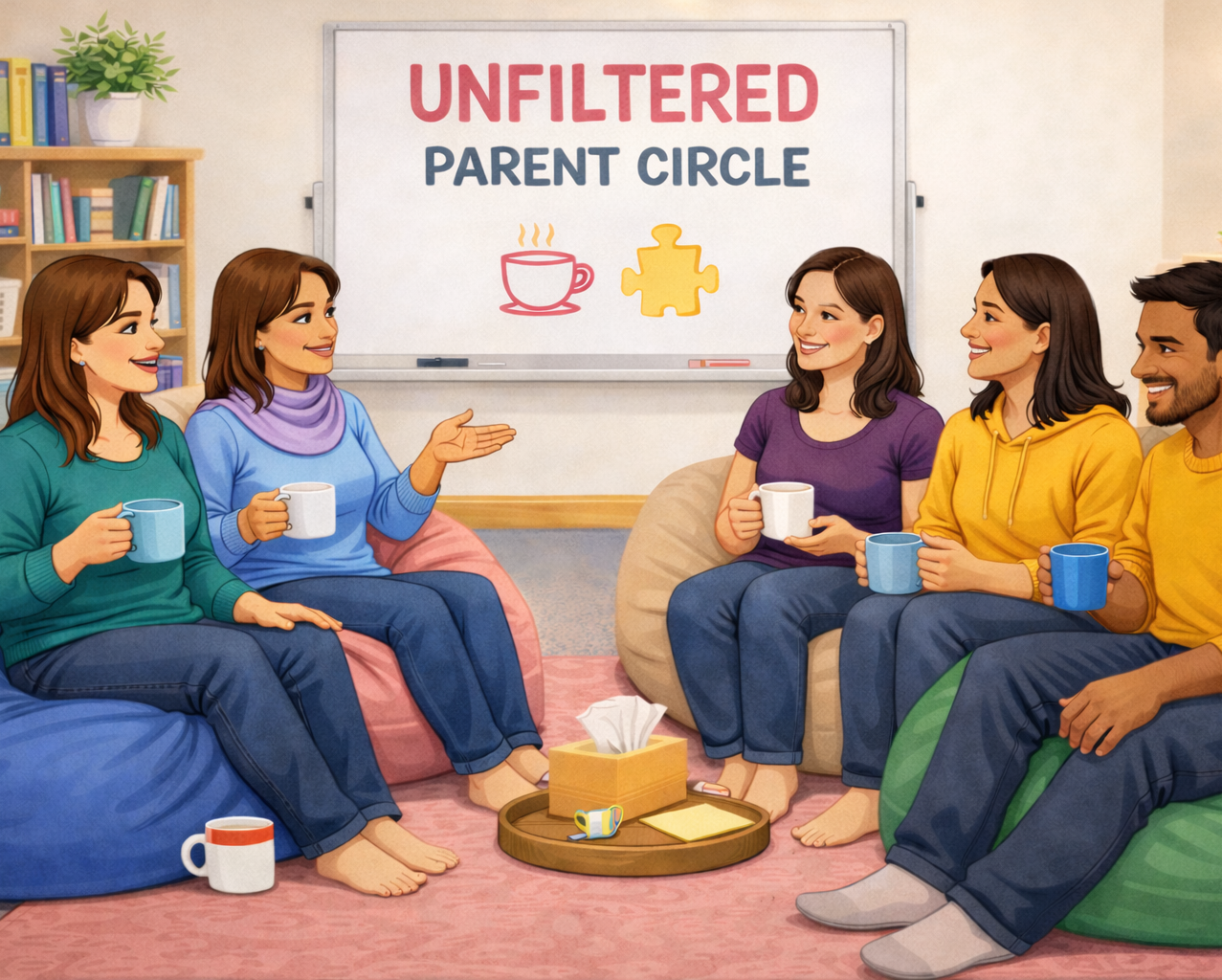
FamilyKind will establish SEND parent support groups across three community hubs located in areas of higher deprivation within Wigan.
Each group will:
- Run weekly.
- Be delivered as two-hour sessions.
- Offer a safe, welcoming and non-judgmental space.
- Be open to parents and carers of children with SEND or emerging additional needs.
The groups are designed as a gateway into wider support rather than a clinical or service-led intervention.
What Families Gain
Parents and carers attending the groups will benefit from:
- Peer support and connection with others who understand their experiences.
- Space to talk openly about challenges without judgement.
- Access to trusted SEND guidance from an experienced SENDCo.
- Practical advice on education, local authority and NHS pathways.
- Support with understanding EHCP processes, referrals and school communication.
- Templates, resources and signposting to relevant services.
Step-Up Support
Families attending community groups will have the option to access one-to-one SEND advocacy sessions.
These sessions provide dedicated time for:
- Individual case discussion.
- Support drafting correspondence or forms.
- Clarifying next steps and decision-making.
- Navigating complex or stalled processes.
One-to-one sessions are accessed through the community groups, ensuring support remains relational and connected rather than transactional.
Strand 2: School-Based SEND Coffee Mornings
Families attending community groups will have the option to access one-to-one SEND advocacy sessions.
These sessions provide dedicated time for:
- Individual case discussion.
- Support drafting correspondence or forms.
- Clarifying next steps and decision-making.
- Navigating complex or stalled processes.
One-to-one sessions are accessed through the community groups, ensuring support remains relational and connected rather than transactional.
Strand 2: School-Based SEND Coffee Mornings
Description
FamilyKind will deliver SEND-focused coffee mornings on behalf of schools, particularly at key transition points such as Year 6 to Year 7.
During the pilot year, this service will be offered free of charge to schools, funded through the project.
What FamilyKind Provides
FamilyKind will manage the full delivery of each coffee morning, including:
- Planning and coordination.
- Liaison with external agencies.
- Hosting and facilitation on the day.
- Provision of refreshments.
- Creation of parent resource packs.
This removes operational and administrative pressure from school SEND teams while improving the quality and consistency of parent engagement.
Added Value
Parents attending coffee mornings will:
- Experience SEND support in a calm, informal setting.
- Receive accessible information about local services.
- Take away sensory and practical resources.
- Be signposted into FamilyKind community groups where appropriate.
For schools, this supports earlier engagement, reduces conflict and builds trust before challenges escalate.
Inclusive Relational Practice
FamilyKind is committed to delivering support that is inclusive, accessible and non-judgemental in practice, not just in principle.
Sessions are designed to be welcoming and low-pressure, with no expectation for families to share more than they feel comfortable with. Information is shared using clear, accessible language, avoiding jargon and overly technical terminology wherever possible.
Delivery recognises that many parents and carers of children with SEND may experience their own additional needs, anxiety or barriers to engagement. Flexibility, patience and trust-building are therefore central to how support is offered.
Safeguarding, confidentiality and professional boundaries are maintained at all times, with clear pathways in place should concerns arise. Families are supported to engage with services, not judged for previous disengagement or perceived non-compliance.
This values-led approach ensures families feel safe, respected and empowered, creating the conditions for meaningful engagement and sustainable change.
Outputs (Pilot Year)
During the 12-month pilot, the project expects to deliver:
- Three weekly community SEND parent groups.
- Regular one-to-one SEND advocacy sessions linked to group attendance.
- SEND coffee mornings delivered in partnership with local schools.
- Practical SEND resources and templates for families.
Exact numbers will remain flexible to ensure responsiveness to community need while maintaining quality and safeguarding.
Impact & Outcomes
The project will focus on meaningful, human-centered outcomes.
Expected outcomes include:
- Increased parental confidence navigating SEND systems.
- Reduced feelings of isolation and stress among parents and carers.
- Improved wellbeing and emotional resilience of families.
- Stronger, more positive relationships between families and schools.
- Earlier engagement with appropriate services, reducing escalation.
Measuring Impact
Impact will be measured through:
- Attendance and engagement data.
- Parent feedback and reflective evaluation tools.
- Qualitative case studies and lived experience stories.
- Feedback from schools and partner organisations.
Findings will inform future delivery, funding applications and sustainability planning.
Sustainability and Future Development
The SEND Outreach Project represents the first phase of a longer-term, staged development model.
Phase 1: Pilot and Proof (Year 1)
The 12-month pilot focuses on:
- Delivering community SEND parent groups across three hubs.
- Providing one-to-one SEND advocacy through group engagement.
- Supporting schools through funded SEND coffee mornings.
- Building trust with families, schools and partners.
- Gathering robust qualitative and engagement-based evidence.
Key outcomes of Phase 1 include a validated delivery model, clear impact evidence and strengthened local partnerships.
Phase 2: Consolidation and Expansion (Years 2–3)
Building on the pilot year, FamilyKind will:
- Expand community groups into additional areas of need.
- Introduce SEND-focused CPD and training for school staff.
- Develop structured referral and navigation support sessions.
- Build partnerships with external organisations delivering child-focused outreach.
- Introduce sessional staff and peer facilitators to support delivery.
This phase focuses on stabilising income, diversifying funding streams and increasing reach while maintaining relational quality.
Phase 3: Community Base Development (Years 3–5)
As delivery and partnerships mature, FamilyKind will work towards establishing a permanent community base.
This space will:
- Combine a bookshop and café-style environment.
- Offer a safe, welcoming and non-clinical setting for families.
- Provide space for parent groups, advocacy sessions and informal connection.
- Include provision for children to engage in parallel activities, including outdoor sessions.
The community base will act as a visible, trusted hub for SEND-informed family support, reducing isolation and strengthening community resilience.
Phase 4: Embedded Community Hub (Longer Term)
In the longer term, the FamilyKind hub will function as:
- A central point for SEND advocacy and navigation support.
- A base for training, CPD and partnership delivery.
- A space for co-produced resources and family-led initiatives.
- A sustainable social enterprise supporting ongoing delivery.
Each phase is intentionally designed to build on learning, evidence and relationships from the previous stage, ensuring growth is responsible, ethical and community-led.
Summary
The FamilyKind SEND Outreach Project provides early, relational and preventative support to families at a time of increasing pressure on SEND systems.
By meeting families where they are, supporting schools and reducing barriers to engagement, the project strengthens families, builds trust and creates space for better outcomes.
This pilot represents the first step toward a sustainable, community-led model of SEND support in Wigan.